
Why Soil Organic Matter Is the Foundation of Healthy Soil
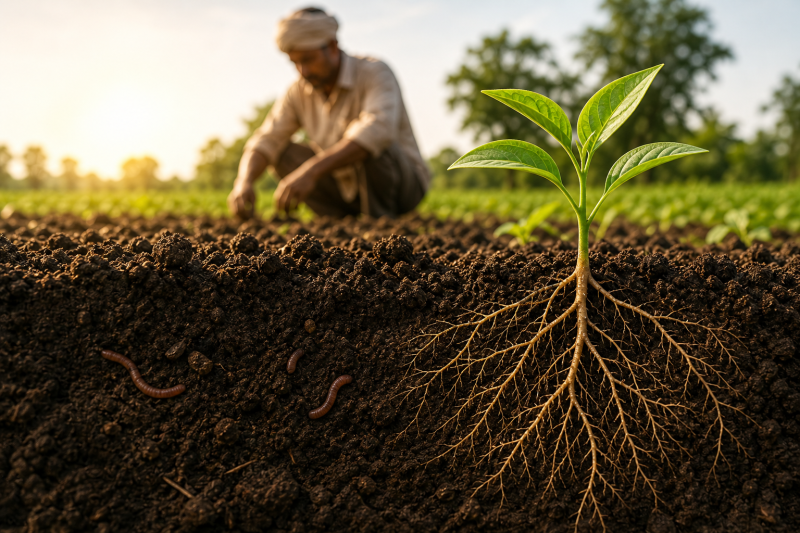
Healthy crops begin below the surface.
While crop nutrition is often discussed in terms of nitrogen, phosphorus and potassium, the physical and biological condition of the soil is equally important. One of the key factors connecting soil structure, moisture, roots, microorganisms and nutrient behaviour is soil organic matter.
Soil organic matter develops from decomposing plant residues, roots, manures, composts and other biological materials. Although it may represent only a relatively small part of the total soil mass, its influence on the way soil functions can be substantial.
For growers interested in long-term productivity, organic matter should therefore be viewed as part of the soil’s basic infrastructure rather than simply as another source of nutrition.
1. Organic Matter Helps Build Better Soil Structure
Healthy soil contains aggregates—small groups of soil particles bound together into a stable structure.
Organic matter contributes to the formation and stability of these aggregates. Better aggregation can help create a soil environment with improved pore space, allowing air and water to move more effectively through the root zone.
This can be particularly valuable in cultivated soils that are vulnerable to compaction, crusting or loss of structure.
A better-structured soil is generally easier for roots to explore and can provide more favourable conditions for crop establishment.
2. It Supports Better Moisture Management
Water availability is one of the most important factors affecting crop performance.
Organic matter can improve the soil’s ability to retain moisture while supporting adequate drainage and aeration. This helps create a more balanced root-zone environment, particularly where rainfall is irregular or irrigation needs to be managed carefully.
The objective is not simply to hold more water, but to improve the soil’s overall ability to manage water effectively.
Better soil structure and organic-matter management can therefore contribute to more resilient moisture conditions around plant roots.
3. Organic Matter Supports a Living Soil
Soil is biologically active.
Bacteria, fungi and many other organisms participate in the decomposition of organic residues and the cycling of nutrients within the soil system.
Organic materials provide an important source of carbon and energy for many of these biological processes.
By maintaining organic matter, growers help create an environment in which beneficial soil activity can continue. This is one reason why soil health cannot be understood only through chemical fertiliser analysis—the biological component of the root zone also matters.
4. It Plays an Important Role in Nutrient Management
Organic matter interacts with nutrients in several ways.
It can contribute nutrients through decomposition, influence the soil’s capacity to retain certain nutrient ions and help support biological processes involved in nutrient cycling.
This does not mean that organic matter replaces a properly planned crop-nutrition programme.
Instead, it helps create the soil environment in which nutrients, roots and microorganisms interact.
For this reason, organic-matter management works best when combined with soil testing, crop-specific nutrition and responsible agronomic practices.
5. Healthy Organic Matter Levels Support Root Development
Roots need more than nutrients.
They need suitable physical space, oxygen, moisture and a favourable biological environment.
When soil structure improves, roots can often penetrate and explore the soil more effectively. Better moisture behaviour and biological activity can further support the conditions surrounding the active root zone.
Strong soil management therefore starts by asking not only, “What should we apply to the crop?” but also, “What kind of environment are we creating for its roots?”
6. Organic Matter Helps Build Long-Term Soil Resilience
Intensive cultivation can gradually reduce soil organic matter if crop residues and organic inputs are not managed appropriately.
Rebuilding it is usually a long-term process.
Depending on the production system, growers may consider practices such as:
- Incorporating suitable crop residues
- Applying well-processed organic manure
- Using quality compost or vermicompost
- Introducing appropriate cover crops
- Following crop rotations
- Reducing unnecessary soil disturbance
- Maintaining balanced crop nutrition
- Managing irrigation efficiently
No single practice works equally well for every farm. Soil type, climate, cropping system and existing soil condition should guide the approach.
Organic Manure and Vermicompost as Part of the System
Organic inputs such as properly processed organic manure and vermicompost can be useful tools for adding organic material back into agricultural soils.
Their role should be understood within a wider soil-health programme rather than as isolated solutions.
Product quality, maturity, source material, application rate and compatibility with the farming system all matter.
When used responsibly, organic inputs can complement broader efforts to improve soil structure, biological activity and root-zone conditions.
Soil Health Is Built Season by Season
There is no instant shortcut to building healthier soil.
Improving organic matter requires consistency and a long-term view.
A well-designed soil-health programme brings together organic matter, biological activity, crop nutrition, water management and root development.
At GAONKALA AGRO, our approach is built around this soil-first philosophy: helping agriculture move from simply supplying inputs toward creating healthier, more resilient soil systems.
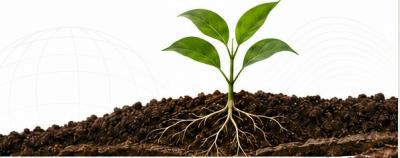
Healthy soil supports stronger roots. Stronger roots support healthier crops. And healthier soil systems create a better foundation for productive agriculture over time.




.png)